
J French’s I Don’t Believe In Bad Days 2 arrives as more than another independent rap release. It feels like the continuation of a personal philosophy, a creative brand, and a career strategy built around resilience. The project is motivational without sounding forced, confident without feeling empty, and ambitious without losing the personal edge that has made J French’s story stand out.
Released on June 26, 2026, I Don’t Believe In Bad Days 2 is listed on Apple Music as a 10-song, 32-minute hip-hop/rap album under Umbrella By J French. The full project listing on UnitedMasters includes “Breakfast III,” “Mood,” “SUV Music,” “Rush,” “Unbothered,” “Fumes,” “Self Love,” “Find Somebody,” “Break Through,” and “Cleanse.”
That sequencing gives the album a sense of movement. “Breakfast III” opens the project with the feeling of routine, hunger, and daily discipline. It sounds like an artist returning to the table with more focus, more control, and a clearer understanding of what he is building. From there, “Mood” brings in Curren$y, one of hip-hop’s most consistent independent voices, making the collaboration feel purposeful rather than random. Curren$y’s presence connects J French to a lineage of artists who have built careers through lifestyle, catalog strength, and audience loyalty rather than chasing every trend.
“SUV Music” continues that lifestyle energy, carrying the feeling of motion, travel, and forward momentum. “Rush” and “Fumes” bring pressure into the picture, while “Unbothered” suggests emotional control in the middle of noise. The second half of the album leans deeper into the message. “Self Love,” “Find Somebody,” “Break Through,” and “Cleanse” read almost like chapters in a self-development book. J French is not only rapping about success; he is mapping the emotional process behind it.
That is where I Don’t Believe In Bad Days 2 separates itself from a standard motivational project. The title could have easily become a slogan, but J French uses it as a framework. The album does not pretend that struggle disappears. Instead, it argues that struggle can be redirected. Bad days become lessons. Pressure becomes fuel. Setbacks become part of the story rather than the end of it.
This mindset-driven approach places J French in conversation with several different independent artist models. Russ built his reputation through self-production, ownership, and direct consistency. Chance the Rapper became a symbol of independent disruption and community-first branding. Curren$y turned lifestyle into longevity, proving that a loyal audience and steady catalog can matter just as much as radio dominance. J French fits into that broader independent conversation, but his lane is more rooted in optimism, healing, confidence, and personal transformation.
Commercially, the project also shows real movement. The Source reported that I Don’t Believe In Bad Days 2 outperformed Drake’s Iceman on Amazon’s Best Sellers chart during its pre-order campaign before debuting inside the Top 10 of the iTunes Top 200 Albums Chart. The same report noted that the album was written and produced entirely by J French and includes features from Curren$y and Demetrius Meech Shipp Sr., known for producing 2Pac’s “Toss It Up.”
For an independent artist, that type of momentum matters. It proves that J French is not simply relying on a positive message; he is learning how to activate an audience around that message. The success of the project suggests that listeners are buying into the world he is creating, not just one song or one feature.
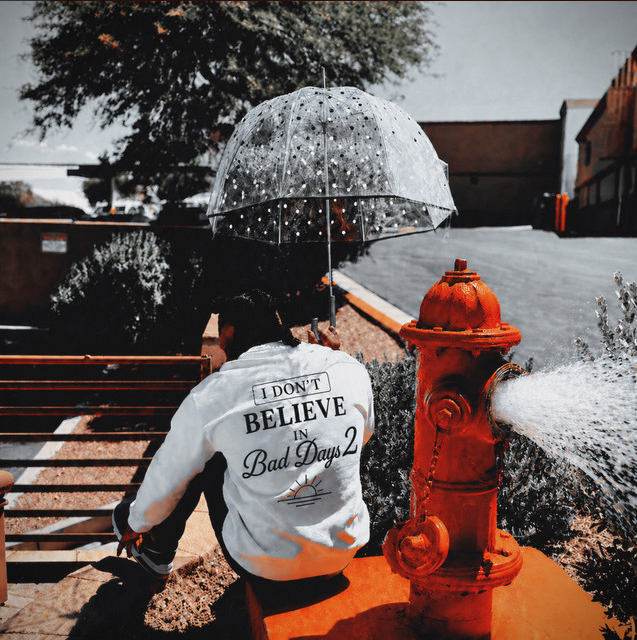
That world extends beyond music. J French has also connected his creative identity to fashion through Umbrella By J French. A Hollywood Times feature described the clothing line as being inspired by his love for tennis and explained that “Umbrella” represents preparation, resilience, and solidarity.
That detail is important because it connects directly back to the album’s title. I Don’t Believe In Bad Days 2 is not only a project name; it is a brand idea. Umbrella By J French gives that idea a physical form. The music delivers the mindset, while the fashion gives fans something they can wear and carry into real life. That is how modern artist brands grow: the message starts in the songs, then expands into visuals, clothing, content, and community.
J French also benefits from having a story that gives his message credibility. In an Authority Magazine profile, his journey is connected to overcoming a severe speech impediment through rap. That background gives the music an added layer because the confidence in his work is not simply performed; it feels earned.
His presence as a speaker also strengthens that message. In his TEDx talk, “How to Achieve Confidence Through Storytelling,” J French connects storytelling with confidence, breakthrough, and personal transformation. That makes I Don’t Believe In Bad Days 2 feel like part of a bigger mission, not just another rollout.
The album’s strongest quality is its balance. It does not abandon hip-hop for self-help, and it does not flatten its message into simple positivity. The project still has movement, confidence, and style, but it also carries an emotional center. J French seems interested in what happens after ambition — the discipline, reflection, healing, and self-control required to keep going when the excitement fades.
That is why the title works. I Don’t Believe In Bad Days 2 sounds like a declaration, but underneath it is a work ethic. The phrase is not about ignoring reality. It is about choosing not to surrender your perspective to one difficult moment. In that sense, the album becomes useful. It gives listeners a language for resilience.
Legacy is the bigger conversation here. J French is not building like an artist who only wants a temporary chart moment. He is building like someone thinking about catalog, ownership, identity, and long-term impact. The Curren$y feature gives the project independent credibility. The reported chart momentum gives it proof of demand. The fashion connection gives it brand depth. The tracklist gives it emotional structure. Together, those pieces make I Don’t Believe In Bad Days 2 feel like a serious step forward.
In a music era where many artists are trying to go viral first and figure out the brand later, J French appears to be doing the opposite. He is building the foundation first. The songs are part of the story, but so are the clothes, the message, the visuals, the entrepreneurial moves, and the way he positions himself as someone who wants to inspire as much as entertain.
I Don’t Believe In Bad Days 2 succeeds because it understands that independence is not just about releasing music without a major label. Independence is about having a clear identity, controlling the message, and building something that can survive beyond a single rollout.
With this project, J French continues to shape a lane that belongs to him: motivational but still sharp, independent but still polished, personal but still commercially aware. He is not just making music for people to stream. He is building a mindset people can live with.
That may be the real victory of I Don’t Believe In Bad Days 2. It turns J French’s belief system into sound, style, and strategy — and in doing so, it brings him one step closer to building the kind of legacy that lasts longer than a release week.